The European Union maintains some of the world’s strictest plant health requirements for wood packaging materials. Exporters shipping to EU member states face rigorous enforcement, significant penalties for non-compliance, and evolving regulations that demand constant attention.
Whether you’re exporting machinery, electronics, automotive parts, or any other product requiring wooden packaging, understanding EU requirements is essential for avoiding costly shipment delays and compliance failures.
This comprehensive guide covers everything Chinese exporters need to know about shipping compliant wood packaging into the European Union.
The Regulatory Framework: Two Layers of Requirements
ISPM 15: The International Foundation
The International Plant Protection Convention (IPPC) established ISPM 15 to prevent the spread of invasive pests through wood packaging in international trade. ISPM 15 requirements include:
- Heat treatment (HT): Wood must reach core temperature of 56°C (133°F) for minimum 30 minutes
- Methyl bromide fumigation (MB): Gas treatment at minimum 48 g/m³ for 24 hours (though increasingly restricted)
- IPPC marking: All compliant wood packaging must bear official markings
- Dunnage requirements: All wood packaging material including loose wood used for cushioning
The IPPC framework applies universally among participating countries—but the EU has layered additional requirements on top.
EU Plant Health Regulation: 2016/2031
Regulation (EU) 2016/2031 (Plant Health Regulation) represents a significant strengthening of plant health controls within the EU. This regulation:
- Replaced previous directives with directly applicable rules
- Increased penalties for non-compliance
- Expanded the list of prohibited materials
- Strengthened enforcement powers for member state authorities
- Eliminated methyl bromide treatment acceptance for most wood packaging
The Plant Health Regulation operates alongside ISPM 15, and exporters must satisfy both frameworks.
Heat Treatment: The Only Accepted Method
EU’s Position on Methyl Bromide
Unlike some regions where methyl bromide remains available under quarantine exemptions, the EU has effectively eliminated methyl bromide acceptance for wood packaging:
- Regulation 2016/2031: Does not recognize methyl bromide as compliant treatment
- Commission Implementing Regulation (EU) 2021/760: Establishes entry requirements that effectively exclude MB-treated materials
- Member state enforcement: National plant protection organizations consistently reject MB-treated wood packaging
Consequence: Any wood packaging treated with methyl bromide will be rejected at EU borders, regardless of valid ISPM 15 markings.
Heat Treatment Requirements
For wood packaging entering the EU, heat treatment must achieve:
- Core temperature: 56°C (133°F) maintained throughout wood
- Minimum duration: 30 consecutive minutes at target temperature
- Treatment code: “HT” designation on IPPC marks
- Kiln-dried wood: Moisture content typically below 20%
Manufacturer certification: Heat treatment must be performed by IPPC-certified facilities. For example, Rizhao Echon Wood Products Co.,Ltd holds IPPC certification CN-42204 HT, indicating approved heat treatment operations in China.
Bark Restrictions: EU Standards Exceed ISPM 15
ISPM 15 Bark Requirements
Standard ISPM 15 allows wood packaging with small bark fragments:
- Bark pieces less than 3 cm in width (regardless of length)
- Bark pieces exceeding 3 cm width must pass specific inspection criteria
- Limited tolerance accounts for practical manufacturing realities
EU Enhanced Requirements
The EU applies stricter bark restrictions:
Complete bark prohibition: Wood packaging entering the EU must be essentially bark-free. Small isolated bark flakes may be acceptable if:
- Individual flakes are less than 1 cm in width, OR
- Bark coverage is less than 1% of the wood surface area, AND
- No bark is present in cracks, crevices, or under board surfaces
Practical interpretation: EU inspectors look for any bark that could conceal insects or fungal spores. Conservative approaches to bark content significantly reduce rejection risk.
Why EU Bark Standards Are Stricter
Bark provides ideal habitat for:
- Bark beetles and their life stages
- Fungal spores and pathogens
- Mites and other micro-organisms
- Eggs and larvae of wood-boring insects
Removing bark eliminates potential infestation sites and improves inspection visibility for plant health authorities.
Wood Packaging Material Definitions
The EU definition of wood packaging material is broad and includes:
Covered Materials
- Pallets: Platform structures supporting cargo
- Crates: Box-type containers with partial or complete sides
- Boxes: Enclosed containers for products
- Dunnage: Loose wood used for spacing, blocking, or bracing
- Pallet collars: Removable sides for pallet-based packaging
- Drums: Cylindrical containers made of wood
- Spools: Reel-type structures
Engineered Wood Products
Engineered wood products are generally exempt from ISPM 15 requirements:
- Plywood:.layers of wood bonded with adhesive under pressure
- Oriented Strand Board (OSB): Compressed wood strands with adhesive
- Particleboard: Compressed wood particles with adhesive
- Fiberboard: Compressed wood fibers (including MDF and HDF)
Important: These exemptions only apply if products are manufactured at temperatures exceeding 60°C (140°F), contain no bark, and include no unprocessed wood components.
Verification: When using engineered wood, obtain manufacturer declarations confirming exemption criteria are met. Some EU member states scrutinize engineered wood more closely than others.
Entry Procedures: What Happens at EU Borders
Phytosanitary Inspection Process
Wood packaging entering the EU undergoes inspection by national plant protection organizations:
Documentation checks:
– Verification of IPPC marking presence and format
– Cross-reference of producer numbers against official databases
– Review of accompanying certificates
Physical inspection:
– Visual examination for signs of pest activity
– Bark content assessment
– Measurement of treatment indicators (if applicable)
– Random sampling for laboratory analysis
Decision outcomes:
– Clearance: Packaging meets all requirements
– Treatment: Non-compliant materials must be treated at border (at cost to importer/consignee)
– Re-export: Non-compliant materials may be returned to origin
– Destruction: Severely non-compliant materials destroyed under supervision
Red Line Countries
The EU maintains a “red line” system identifying high-risk origins and pathways. Wood packaging from these sources faces:
- Increased inspection rates
- Mandatory treatment requirements
- Reduced tolerance for any non-conformances
- Enhanced documentation requirements
While China is not universally designated as high-risk, specific pathways and origin regions may trigger enhanced scrutiny.
Common Reasons for Rejection at EU Borders
Understanding why shipments fail helps exporters prevent problems:
1. Missing or Incorrect IPPC Marking
- Mark not present on wood packaging
- Mark partially legible or damaged
- Producer number not registered in IPPC database
- Treatment code missing or incorrect
Prevention: Verify marking presence and legibility before shipment. Marks should appear on at least two opposite sides of each pallet or crate.
2. Bark Content Violations
- Visible bark fragments exceeding tolerance
- Bark in cracks, crevices, or under surfaces
- Multiple small bark pieces adding to significant coverage
Prevention: Specify bark-free wood when ordering packaging. Inspect each piece before packing.
3. Evidence of Pest Activity
- Holes suggesting wood-boring insects
- Sawdust or frass indicating recent activity
- Live insects observed during inspection
- Fungal discoloration suggesting decay
Prevention: Store packaging in pest-free conditions. Use clean, stored wood. Avoid outdoor storage near vegetation.
4. Incorrect Treatment Method
- Methyl bromide marking (“DB” or “MB” codes)
- Treatment method not matching IPPC registration
- Temperature records indicating inadequate treatment
Prevention: Confirm your supplier uses heat treatment (HT). Request treatment records.
5. Engineered Wood Misclassification
- Plywood claimed but containing bark
- OSB with unprocessed wood components
- Products not meeting temperature manufacturing requirements
Prevention: Obtain manufacturer declarations. Verify engineered wood authenticity.
Member State Variations
While EU regulations are harmonized, practical enforcement varies:
Countries with Stringent Enforcement
Germany: Known for thorough inspections and low tolerance for non-conformances. Expect detailed documentation review.
France: Systematic inspection protocols with particular attention to bark restrictions.
Netherlands: Major entry point for shipments; high inspection volumes with corresponding scrutiny.
Italy: Strict bark enforcement, especially for wood packaging from certain origins.
Practical Tips for All Member States
- Documentation consistency: Ensure all paperwork matches physical shipments exactly
- Marking visibility: Clearly mark all visible surfaces, not just one face
- Conservative bark approach: Opt for completely bark-free materials rather than maximum tolerance
- Treatment verification: Maintain treatment records for minimum two years
- Consignee communication: Inform EU buyers of IPPC certification details for customs prep
Requirements for Chinese Exporters
Specific Considerations
China is the world’s largest exporter of goods requiring wood packaging. EU requirements affect Chinese exporters particularly because:
High volume: Massive trade flows mean Chinese wood packaging is extensively scrutinized
Perception factors: Some origins face enhanced risk assessment based on historical interception data
Supplier diversity: Not all Chinese manufacturers meet EU standards—selecting qualified suppliers is critical
Working with Certified Suppliers
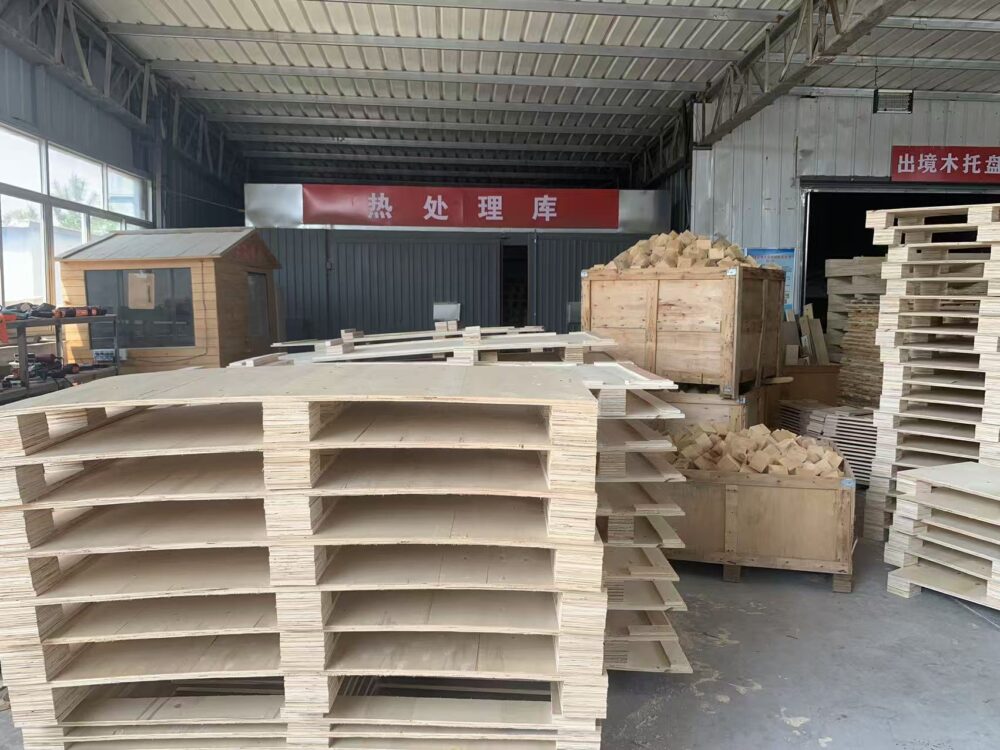
Rizhao Echon Wood Products Co.,Ltd exemplifies the certified supplier approach:
- IPPC certification: Registered producer number (CN-42204 HT)
- Heat treatment capability: Kiln facilities achieving required temperatures
- Bark-free materials: Wood sourcing and processing ensuring bark-free products
- Documentation systems: Traceable treatment records and certificates
When selecting suppliers, verify:
- Active IPPC registration: Check national plant protection organization databases
- Treatment method: Confirm heat treatment (HT) is the only method used
- Quality control: Procedures for ensuring bark-free, compliant materials
- Export experience: Familiarity with EU requirements and documentation needs
Documentation Checklist
Before shipping to the EU, ensure you have:
- [ ] IPPC marks present on all wood packaging (minimum two opposite sides)
- [ ] Treatment certificates from IPPC-certified facility
- [ ] Supplier IPPC registration verification
- [ ] Packing list identifying wood packaging materials used
- [ ] Commercial invoice with HS codes
- [ ] Certificate of origin (if required by buyer)
- [ ] Any additional documentation required by specific member state
Consequences of Non-Compliance
Financial Penalties
- Treatment costs: Professional heat treatment at EU facilities ($500-$5,000+ depending on volume)
- Storage fees: Daily charges while non-compliance is resolved
- Demurrage: Container and cargo holding charges during delays
- Re-export costs: Transportation back to origin or destruction
Business Impact
- Shipment delays: Weeks or months of delays affecting production schedules
- Customer relationships: Fines and delays damage buyer confidence
- Reputation damage: Repeated non-compliance affects future shipments
- Contractual penalties: Sales contracts may include compliance clauses
Regulatory Consequences
- Enhanced scrutiny: Future shipments face increased inspections
- Import alerts: Systematic non-compliance may trigger formal import restrictions
- Supplier blacklisting: Poor-performing origins face general restrictions
Best Practices for EU Compliance
1. Source from Verified Suppliers
Work only with IPPC-certified manufacturers who can demonstrate:
- Active certification with registered producer numbers
- Heat treatment facilities (not methyl bromide)
- Quality systems ensuring bark-free materials
- Track record of successful EU shipments
2. Implement Incoming Inspection
Before packing shipments, verify:
- IPPC marks are present and legible
- No bark visible on any wooden components
- No signs of pest activity
- Wood appears properly heat-treated (kiln-dried appearance)
- Treatment documentation accompanies materials
3. Maintain Treatment Records
Keep organized records including:
- Treatment certificates for each shipment
- Temperature monitoring data
- Producer registration confirmations
- Chain of custody documentation
4. Communicate with EU Buyers
Coordinate with European customers to:
- Share IPPC certification information
- Confirm their understanding of requirements
- Identify any additional documentation needed
- Plan for efficient customs clearance
5. Stay Informed
Monitor regulatory developments:
- EU Commission guidance documents
- IPPC announcements regarding wood packaging
- Industry association communications
- Trading partner updates
Summary: Navigating EU Wood Packaging Requirements
Related: Australia requirements
Related: treatment methods
Related: ISPM 15 checklist
The EU’s wood packaging requirements demand attention to detail and partnership with qualified suppliers:
- Heat treatment only: Methyl bromide is not accepted—ensure your supplier uses HT
- Bark-free materials: EU standards exceed ISPM 15; target zero bark content
- Complete marking: IPPC marks must appear on multiple surfaces with correct format
- Documentation ready: Treatment records and certificates must be available
- Engineered wood awareness: Some products are exempt—verify and document
Chinese exporters succeeding in EU markets do so by treating wood packaging compliance as a non-negotiable requirement, not an afterthought. The costs of non-compliance—in money, time, and relationships—far exceed the investment in quality, compliant materials from the beginning.
Ready to source EU-compliant wood packaging for your exports?
For IPPC-certified wood packaging solutions, contact Rizhao Echon Wood Products Co.,Ltd at
Frequently Asked Questions
What makes EU wood packaging requirements stricter than standard ISPM 15?
Why is methyl bromide not accepted in the EU?
What are the EU bark restrictions for wood packaging?
What documentation is required for EU wood packaging compliance?
jason@easywoodpack.com or visit www.easywoodpack.com