Australia has some of the strictest wood packaging import requirements in the world. The Australian Department of Agriculture, Fisheries and Forestry (DAFF), formerly known as AQIS (Australian Quarantine and Inspection Service), enforces ISPM 15 plus a layer of Australia-specific biosecurity rules that catch out many first-time exporters. Wood packaging that would clear customs in Europe or North America without question can be rejected, fumigated, or destroyed at Australian ports. This guide walks through exactly what Australia requires for compliant wood packaging imports, the most common reasons shipments are rejected, and what to specify with your packaging supplier to avoid delays.
The Regulatory Framework: Why Australia Is Different
Australia’s biosecurity stance is driven by geography. As an island continent with unique flora, fauna, and agriculture, it has historically been free of many pests that are endemic elsewhere. Once introduced, pests like the Asian gypsy moth, khapra beetle, or Asian longhorn beetle could cause billions of dollars in damage to Australian agriculture and forestry.
The legal basis for wood packaging controls includes:
- Biosecurity Act 2015: Primary legislation
- Biosecurity Import Conditions (BICON): Searchable database of import conditions for every product type
- ISPM 15 (FAO standard): The international baseline Australia enforces
- DAFF Wood Packaging Material policy: Australia-specific requirements layered on top of ISPM 15
The result is that “ISPM 15 compliant” is necessary but not sufficient for Australian imports.
Core ISPM 15 Requirements (Baseline)
All wood packaging entering Australia must meet ISPM 15 baseline requirements:
- All wooden components thicker than 6mm must be treated by approved methods
- Heat treatment (HT): Wood core must reach minimum 56°C for at least 30 minutes
- Kiln drying with heat treatment (KD-HT): Same temperature/time profile
- Methyl bromide (MB): Largely phased out, not preferred for Australia
- Treatment must be performed at an IPPC-registered facility
- The IPPC mark must be applied: wheat symbol, ISO country code, facility number, treatment type (HT or MB)
- Mark must appear on at least two opposite sides, be legible, durable, and not in red or orange
A correctly marked Chinese-origin crate would show, for example: CN-42204 HT alongside the wheat symbol.
Australia-Specific Additional Requirements
Beyond the ISPM 15 baseline, DAFF imposes the following:
1. Bark-Free Requirement
Wood packaging arriving in Australia must be completely bark-free. Even small bark fragments on pallet runners or crate components can trigger inspection failure. The international standard allows minor bark of specific dimensions, but Australia enforces zero bark in practice.
Practical implications:
– Avoid suppliers using rough-sawn lumber unless they de-bark thoroughly
– Plywood and engineered wood (which has no bark) is safer than solid lumber
– Inspect packaging before sealing containers for visible bark fragments
2. Insect-Free Condition
Wood packaging must show no signs of live insects, larvae, or fresh boring holes. Inspections include:
- Visible insect activity in cracks or borings
- Frass (insect droppings)
- Live insects on or in the wood
- Recent emergence holes
Old, sealed-over emergence holes from prior infestations that were eliminated by HT treatment are usually accepted, but inspectors have discretion.
3. Contamination-Free
The wood packaging itself must not carry:
- Soil: Any visible dirt on pallet bottoms or crate runners
- Seeds: Particularly invasive weed seeds
- Plant material: Leaves, twigs, plant debris
- Manure or organic matter
- Snails or snail eggs: Common rejection cause for Mediterranean origin shipments
Storing wood packaging on dirt floors before shipment is a frequent contamination source. Suppliers should store packaging on clean concrete, indoors when possible.
4. Strict Marking Standards
Australia inspects IPPC marks closely. Issues that cause rejection:
- Mark applied with red or orange ink (prohibited colors)
- Mark partially obscured by paint, labels, or strap placement
- Smudged, illegible, or worn marks
- Marks applied with stickers instead of stamps or branded markings
- Marks missing the wheat symbol
- Country code missing or incorrect format
The mark must be a permanent stamp or brand, not a label that could be peeled off.
Common Rejection Reasons and Statistics
Based on DAFF border interception data, the top reasons for wood packaging non-compliance at Australian ports:
| Rejection Cause | Frequency |
|---|---|
| Bark present on wood | ~25% |
| IPPC mark missing, illegible, or non-compliant | ~22% |
| Insect detection (live or evidence) | ~18% |
| Soil contamination | ~12% |
| Plant material/seeds present | ~10% |
| Documentation discrepancies | ~7% |
| Other (manure, snails, etc.) | ~6% |
These are interception statistics—they represent shipments caught at inspection. Many more comply, but the rejection rate for first-time exporters can be 5–15% if they have not specifically targeted Australian requirements.
Consequences of Non-Compliance
When wood packaging fails Australian inspection, possible outcomes include:
1. On-Arrival Treatment
DAFF may require fumigation (methyl bromide) at the port. Costs run AUD $500–$2,500 per container plus delays of 3–10 days. Some commodities cannot tolerate methyl bromide and the cargo may be damaged.
2. Export from Australia
If treatment is not feasible, the wood packaging (sometimes the entire shipment) must be re-exported at the importer’s expense. Re-export costs frequently exceed the original cargo value.
3. Destruction
For severe contamination or repeat offenders, DAFF may order destruction. Importers pay all costs.
4. Importer Penalty
Recurring non-compliance affects the importer’s BICON risk rating, potentially triggering 100% inspection on future shipments. This adds 5–15 days to clearance times indefinitely.
5. Reputational Cost
Australian importers are reluctant to work with foreign suppliers who cause customs problems. A single rejection can end a commercial relationship.
Documentation Requirements
Every shipment with wood packaging entering Australia should include:
- Packing declaration: Statement on letterhead from supplier confirming ISPM 15 compliance, bark-free condition, and contamination-free status
- Phytosanitary certificate: For shipments where the cargo itself requires it (always check BICON)
- IPPC mark photographs: Photos of the actual marks on packaging used (helps if inspection challenges arise)
- Treatment facility certificate: Copy of supplier’s IPPC registration showing facility number
- Pre-shipment cleanliness inspection record: Optional but valuable
A capable wood packaging supplier provides all required documentation as standard practice, not as an extra service.
Pre-Shipment Inspection Programs
Australian importers handling high volumes can register for Pre-Shipment Inspection (PSI) programs. Under PSI:
- DAFF-approved inspectors verify wood packaging compliance before the container leaves origin
- Approved shipments receive expedited clearance at Australian ports
- Inspection cost is borne by the importer
- Reduced inspection frequency lowers overall clearance time
PSI is worth considering for importers shipping 50+ containers annually from a single supplier.
Special Note: Plywood and Engineered Wood
Plywood, OSB, particleboard, and LVL are generally exempt from ISPM 15 because they undergo manufacturing processes that eliminate pests. However, Australia treats this exemption strictly:
- The engineered wood components are exempt
- Any solid wood components (runners, supports, blocking) attached to plywood crates are NOT exempt
- Mixed-construction packaging must still display IPPC marks for the solid wood portions
- Bark-free, contamination-free requirements still apply to all wood elements
Many exporters incorrectly believe a plywood crate needs no IPPC mark, only to find their shipment held for the unmarked solid wood runners underneath.
What to Specify With Your Supplier for Australia
When ordering wood packaging for Australian destinations, include these specifications:
- “Australia DAFF compliant” explicitly written on the purchase order
- ISPM 15 HT treatment (avoid methyl bromide if possible)
- Bark-free, debarked lumber only (or plywood/engineered wood)
- Pre-shipment cleanliness inspection
- IPPC mark in black ink only, applied as permanent stamp or brand
- Mark placement that remains visible regardless of strapping or labels
- Mark verification photos provided with shipping documents
- Packing declaration on supplier letterhead
- Indoor storage of packaging before shipment
- Clean container loading (no dirt or debris carried into container)
Working With Suppliers Experienced in Australia Trade
The most reliable way to avoid Australian biosecurity issues is to work with packaging suppliers who have ongoing Australia trade experience. Indicators of supplier capability:
- Existing Australian customer references
- Familiarity with DAFF terminology (BICON, biosecurity, packing declaration)
- Indoor storage facility for finished packaging
- Documented bark inspection in their quality control process
- Phytosanitary certificate issuance experience
- Photo documentation routinely provided
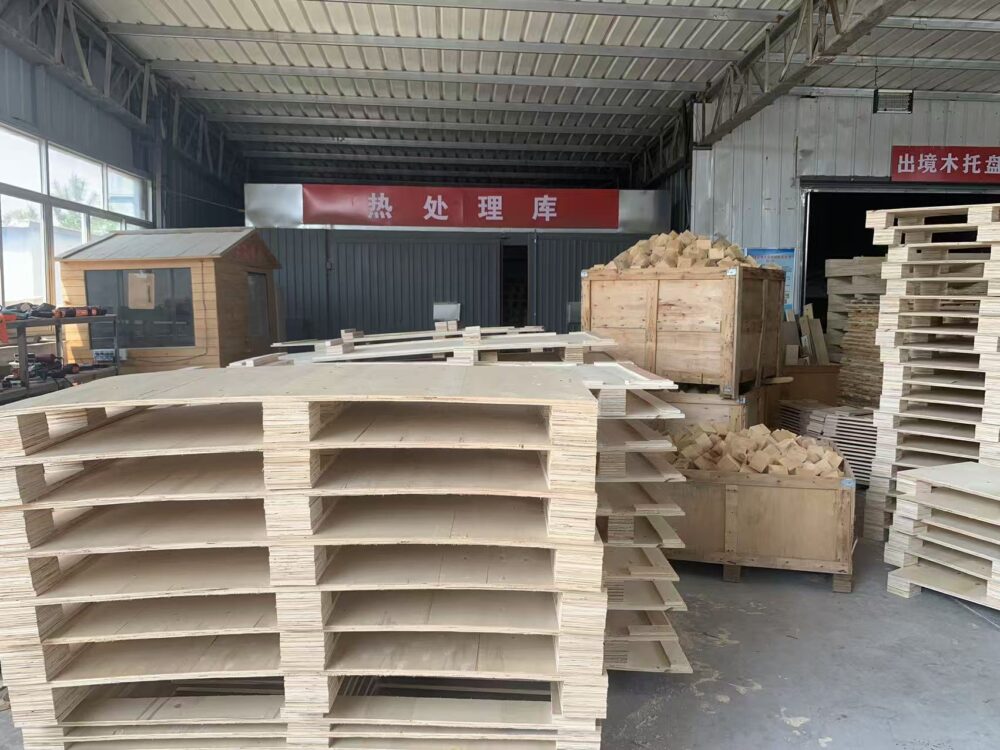
Rizhao Echon Wood Products Co.,Ltd, operating under IPPC registration CN-42204 HT, has multi-year Australia trade experience with bark-free production protocols, indoor storage, photo documentation of every shipment’s marks, and packing declarations provided on letterhead. The facility’s quality protocols are designed for the most demanding destination requirements.
Country-Specific vs. Australia: Quick Comparison
For exporters shipping to multiple destinations, understanding how Australia compares helps prioritize:
| Requirement | EU | USA | Australia | Japan |
|---|---|---|---|---|
| ISPM 15 compliance | Required | Required | Required | Required |
| Bark-free enforcement | Standard | Standard | Strictest | Strict |
| IPPC mark color rules | Standard | Standard | Black preferred | Standard |
| Contamination inspection | Periodic | Standard | Strictest | Strict |
| Documentation depth | Moderate | Moderate | Highest | Moderate |
| Penalty severity | Moderate | High | Highest | Moderate |
Australia consistently ranks at or near the top of strictness across all measures. Packaging that satisfies Australian requirements satisfies most other countries’ requirements as well.
Cost Impact of Australia-Grade Packaging
Australia-grade wood packaging typically costs 5–10% more than baseline ISPM 15 packaging due to:
- More rigorous quality control
- Indoor storage requirements
- Photo documentation
- Pre-shipment inspection (when used)
- Plywood substitution for solid wood (sometimes)
This cost premium is small compared to the cost of a single rejection event (AUD $500–$2,500 in fumigation plus 5–10 days of delay).
Final Recommendations
Related: treatment methods
Related: ISPM 15 compliance
Related: EU requirements
Australia represents one of the world’s most demanding wood packaging compliance environments. Success requires:
- Select suppliers with proven Australia trade experience
- Specify Australia DAFF compliance explicitly, not generically “ISPM 15”
- Insist on bark-free wood and clean storage practices
- Verify documentation completeness before shipping
- Photograph IPPC marks for record
- Consider Pre-Shipment Inspection for high-volume programs
- Build buffer time into delivery commitments to account for possible inspection delays
The investment in getting Australia compliance right pays off in clearance speed, importer satisfaction, and commercial relationship continuity.
For IPPC-certified wood packaging solutions, contact Rizhao Echon Wood Products Co.,Ltd at
Frequently Asked Questions
What makes Australia wood packaging requirements stricter than standard ISPM 15?
Why is bark particularly problematic for Australian imports?
What treatment method is preferred for Australian wood packaging imports?
What happens if wood packaging fails Australian DAFF inspection?
jason@easywoodpack.com or visit www.easywoodpack.com