Choosing the right wooden packaging is important for any export shipment. When goods move across countries, they may face long-distance transport, loading and unloading, warehouse storage, customs inspection, and changing weather conditions. Good packaging can protect the cargo, reduce damage, and help the shipment pass customs more smoothly.
For many industries, wooden packaging is still one of the most practical choices. It is strong, easy to customize, and suitable for many types of cargo. Wooden pallets, wooden crates, steel belt crates, sleeve pack crates, and heavy-duty wooden boxes are widely used for export packaging.
This guide explains how to choose the right wooden packaging for export shipments in a simple way.
Why Wooden Packaging Is Commonly Used for Export
Wooden packaging is used in many international shipments because it provides strong support and good protection. It can be made into different sizes and structures based on the product shape, weight, and transport method.
Compared with simple cartons or plastic packaging, wooden packaging is often better for heavy goods, machinery, metal parts, industrial equipment, glass products, and fragile cargo.
Main Benefits of Wooden Packaging
Wooden packaging has several advantages:
- Strong load-bearing ability
- Suitable for large and heavy cargo
- Easy to customize
- Good protection during sea, air, and land transport
- Can be used with pallets for forklift handling
- Suitable for export packing and long-distance shipping
- Can meet international quarantine requirements when properly treated
For export business, choosing the right packaging is not only about protecting products. It also affects customs clearance, delivery time, and customer satisfaction.
Understand Your Cargo First
Before choosing wooden packaging, you need to understand your cargo clearly. Different goods need different packaging structures.
Check the Cargo Weight
Weight is one of the most important factors. Light products may only need a wooden pallet or a simple wooden crate. Heavy-duty machinery or industrial equipment may need a reinforced wooden crate with stronger base support.
For heavy cargo, the packaging must be strong enough to handle:
- Product weight
- Stacking pressure
- Forklift movement
- Vibration during transport
- Loading and unloading impact
If the crate is not strong enough, it may break during shipping and cause product damage.
Check the Cargo Size
The packaging size should match the cargo size. If the packaging is too small, the product may not fit safely. If it is too large, the product may move inside the box during transport.
A suitable wooden crate should leave enough space for inner protection materials, such as foam, EPE, straps, moisture-proof bags, or corner protectors.
Check the Cargo Shape
Some products have regular shapes, such as boxes, panels, or standard parts. These are easier to pack. Some products have irregular shapes, such as machines, motors, molds, and equipment parts. These may need custom wooden packaging.
For irregular cargo, the packaging supplier should design the crate based on the product shape and support points.
Choose the Right Type of Wooden Packaging
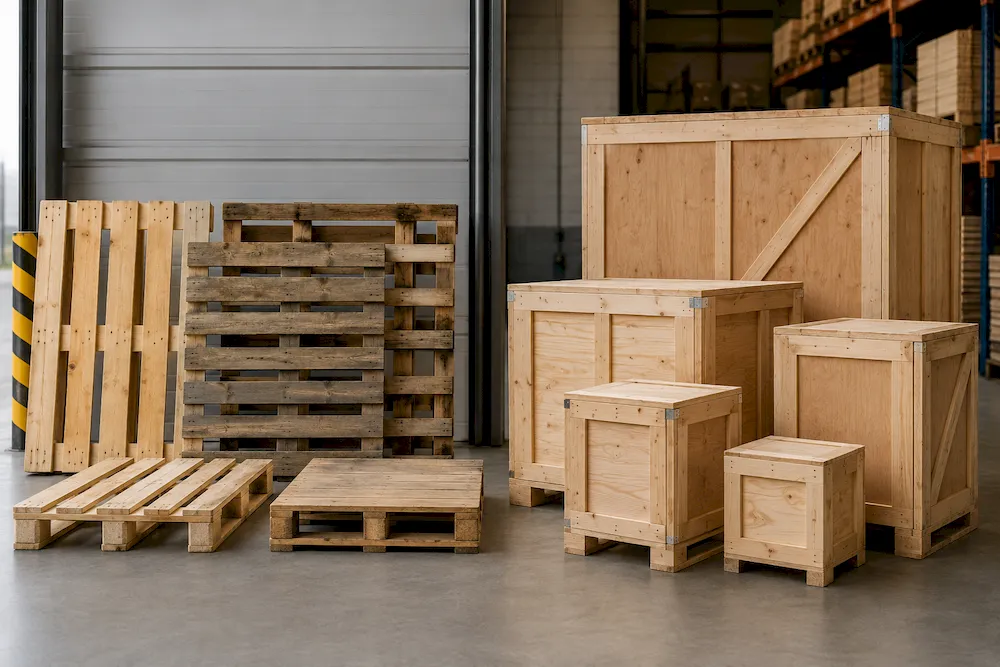
There are several common types of wooden packaging for export shipments. Each type has its own use.
Wooden Pallets
Wooden pallets are mainly used for goods that need easy forklift handling. They are suitable for cartons, bags, drums, boxes, and many standard products.
Wooden pallets can improve loading efficiency and make warehouse handling easier.
They are suitable for:
- Carton goods
- Bagged products
- Machinery parts
- Metal parts
- Bulk cargo with outer packaging
- Goods loaded into containers
If your goods already have strong outer packaging, wooden pallets may be enough.
Wooden Crates
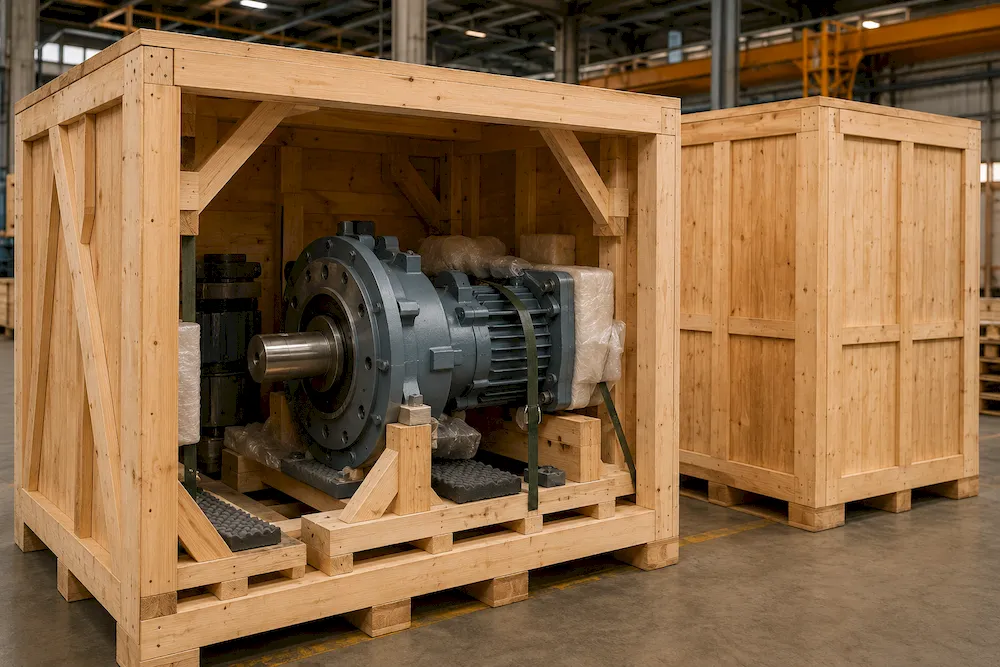
Wooden crates provide better protection than pallets. They are suitable for cargo that needs side protection, stronger structure, or safer transport.
Wooden crates are often used for:
- Machinery
- Equipment
- Auto parts
- Electrical products
- Glass products
- Fragile goods
- Export cargo with higher protection needs
A wooden crate can be open-style or closed-style. Closed wooden crates offer better protection from dust, impact, and outside contact.
Heavy-Duty Wooden Crates
Heavy-duty crates are designed for large and heavy products. They usually have a stronger base, thicker panels, and reinforced corners.
They are suitable for:
- Industrial machines
- Large equipment
- Molds
- Heavy metal parts
- Engineering components
- High-value cargo
For heavy-duty packaging, the bottom structure is very important. The base must support the full weight of the cargo and allow safe forklift operation.
Steel Belt Crates
Steel belt crates are made with wood panels and steel belt reinforcement. They are strong, clean, and often easy to assemble.
They are suitable for export shipments that need strong packaging but also require better space efficiency.
Steel belt crates are often used for:
- Machinery parts
- Electronics
- Auto components
- Hardware
- Industrial products
- Export cargo
They can also help reduce storage space before use because some designs can be folded or assembled quickly.
Sleeve Pack Crates
Sleeve pack crates are often designed with a base, sleeve body, and top cover. They are practical for products that need repeated packing, easy assembly, or container loading.
They are suitable for:
- Medium to large cargo
- Industrial components
- Export goods
- Products that need easy loading and unloading
The structure can be customized based on the cargo and shipping method.
Vacuum Wooden Crates
Vacuum crates are often used for products that need moisture protection. They usually include vacuum packaging, moisture-proof materials, and wooden outer packaging.
They are suitable for:
- Precision equipment
- Electronic products
- Metal products
- Machinery parts
- Products shipped by sea
Sea transport may expose cargo to moisture and salt air. Vacuum packaging can reduce the risk of rust, corrosion, and moisture damage.
Consider the Shipping Method
The shipping method also affects packaging choice.
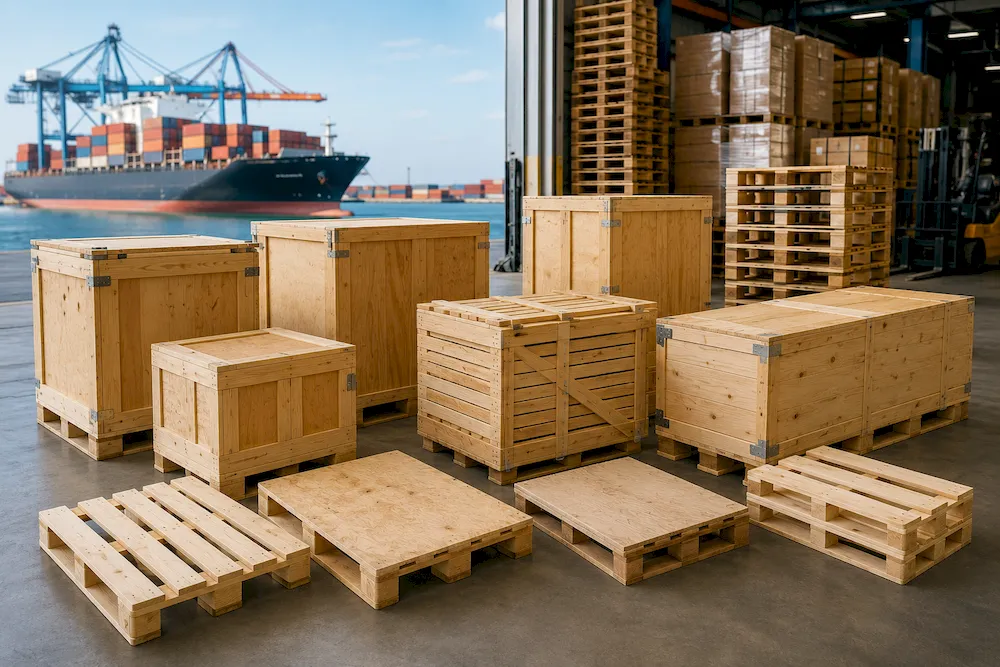
Sea Freight
Sea freight usually takes longer. Cargo may stay in containers for weeks. Moisture and movement are common risks.
For sea freight, packaging should focus on:
- Strong outer protection
- Moisture protection
- Good base support
- Safe container loading
- Anti-rust and anti-corrosion protection if needed
For machinery and metal products, vacuum packaging or moisture-proof bags may be useful.
Air Freight
Air freight is faster, but cost is usually higher. Packaging should be strong but not too heavy.
For air freight, companies often care about:
- Packaging weight
- Space efficiency
- Easy handling
- Cargo safety
Steel belt crates or lightweight plywood crates may be suitable for some air shipments.
Land Transport
Land transport includes trucks, rail, and inland logistics. The cargo may face vibration and repeated loading.
For land transport, packaging should have:
- Stable structure
- Good fixing inside the crate
- Strong pallet base
- Protection against impact
If the cargo needs several transfers, stronger packaging is usually safer.
Make Sure the Packaging Meets Export Standards
Export wooden packaging must meet international quarantine requirements. Many countries require wood packaging materials to follow ISPM 15 standards.
What Is IPPC Marking?
IPPC marking shows that the wood packaging has been treated according to international standards. This helps reduce the risk of pest problems during international trade.
For export shipments, using IPPC-approved wooden packaging can help customs clearance and reduce the risk of delays.
Why Fumigation-Free Packaging Matters
Fumigation-free packaging can be used directly for export when it meets the required standards. This can save time and reduce extra treatment steps before shipment.
For exporters, this is important because delays in customs or quarantine inspection can increase logistics costs and affect delivery schedules.
Check Customization Options
Many export products cannot use standard packaging. Custom wooden packaging is often needed.
Common Customization Details
A good wooden packaging supplier should be able to customize:
- Length, width, and height
- Load-bearing capacity
- Base structure
- Panel thickness
- Inner support
- Forklift entry direction
- Moisture-proof protection
- Reinforced corners
- Marking or labels
- Stackable design
Customization helps make the packaging safer and more suitable for the actual shipment.
Match Packaging to Industry Needs
Different industries have different packaging needs.
For example:
- Machinery industry needs strong load support
- Electronics industry needs moisture and shock protection
- Auto parts industry needs stable and easy handling packaging
- Glass or fragile products need inner cushioning
- Metal products may need anti-rust packaging
The best packaging is not always the thickest or most expensive one. It should match the real transport risk and cargo value.
Pay Attention to Loading and Handling
Good packaging should make loading easier and safer.
Forklift Handling
Most export cargo is moved by forklift. The wooden packaging should have a strong base and enough space for forklift forks.
If the forklift entry design is poor, workers may damage the crate during handling.
Container Loading
For sea freight, packaging size should also consider container loading. A good packaging design can improve space use and reduce shipping cost.
Before production, it is helpful to check:
- Container size
- Number of units per container
- Stacking method
- Loading direction
- Total weight distribution
Good design can reduce wasted space and lower logistics cost.
Work With a Professional Wooden Packaging Supplier
Choosing the right supplier is as important as choosing the right packaging type.
A professional supplier should understand export requirements, cargo protection, and custom packaging design.
What to Look for in a Supplier
You can check whether the supplier has:
- IPPC-approved treatment qualification
- Export packaging experience
- Custom design ability
- Advanced production equipment
- Stable material supply
- Quality management system
- Fast communication
- Ability to handle urgent orders
- Experience with different industries
A supplier with export experience can help you avoid many common problems, such as wrong packaging size, weak structure, missing quarantine marks, or poor container loading design.
Common Mistakes to Avoid
When choosing wooden packaging, many companies only focus on price. This can lead to hidden risks.
Avoid These Problems
- Choosing packaging that is too weak for the cargo
- Ignoring moisture protection for sea freight
- Using non-compliant wood packaging for export
- Leaving too much empty space inside the crate
- Not fixing the cargo inside the box
- Using poor forklift base design
- Not confirming packaging size before production
- Ignoring customs and quarantine requirements
A small packaging mistake may cause product damage, shipment delay, or extra cost.
Final Thoughts
The right wooden packaging can protect your products, improve shipping safety, and help your export process run more smoothly. Before choosing packaging, you should consider the cargo weight, size, shape, shipping method, export standards, and handling requirements.
Wooden pallets are suitable for simple handling and standard cargo. Wooden crates provide better protection. Heavy-duty crates are better for large equipment. Steel belt crates and sleeve pack crates are useful for efficient export packaging. Vacuum crates are suitable for products that need moisture protection.
For export shipments, it is also important to work with an IPPC-approved wooden packaging supplier. This can help your goods meet international quarantine standards, clear customs more efficiently, and reduce logistics risks.
Good packaging is not just a box around your product. It is part of your export supply chain. A strong and well-designed wooden packaging solution can save time, reduce damage, and protect your business reputation.