When companies prepare products for storage, handling, or export shipping, one common question is: should we use wooden pallets or wooden crates?
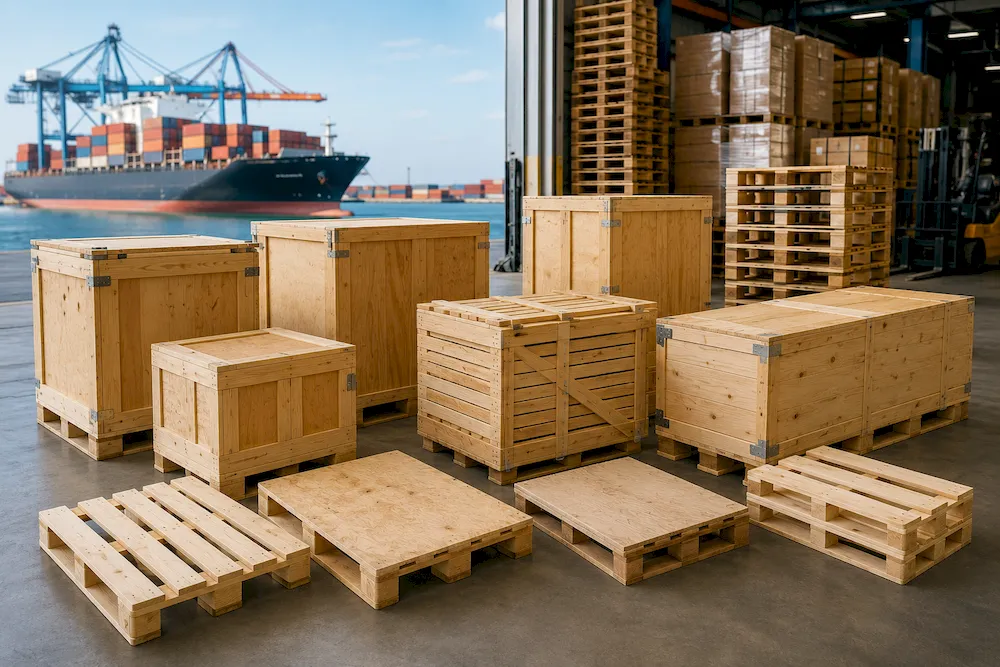
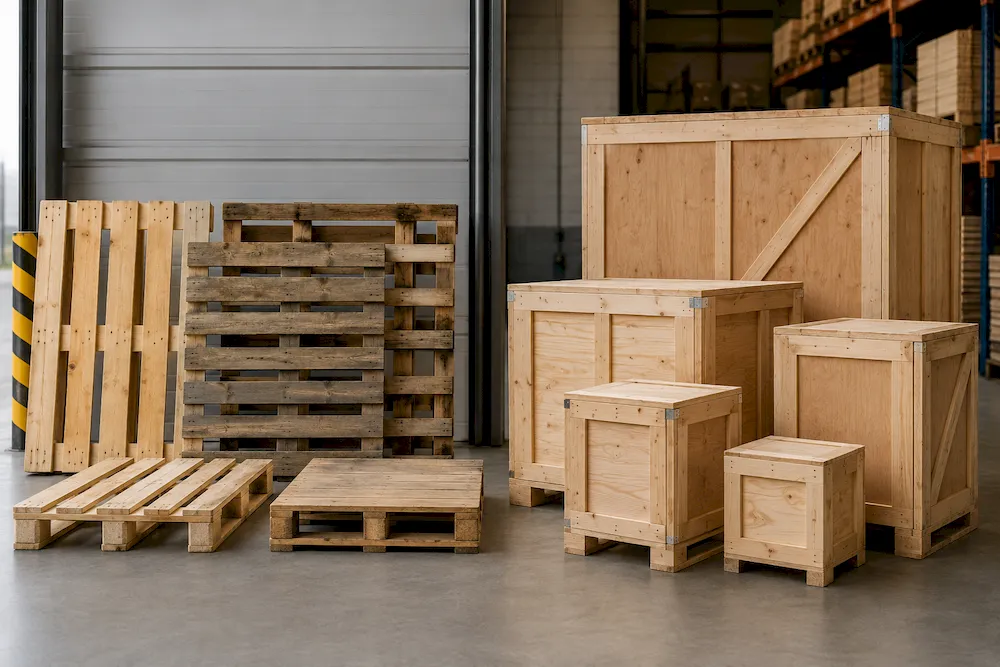
Both wooden pallets and wooden crates are widely used in industrial packaging. They are strong, practical, and suitable for many types of cargo. However, they are not the same. A wooden pallet is mainly used for support and easy handling. A wooden crate is mainly used for stronger protection.
Choosing the right packaging solution can help reduce product damage, improve loading efficiency, and lower logistics costs. This article explains the differences between wooden pallets and wooden crates, their main advantages, and how to choose the better option for your shipment.
What Are Wooden Pallets?
Wooden pallets are flat wooden platforms used to support goods during storage and transportation. Products are usually placed on top of the pallet and fixed with straps, stretch film, cartons, or other packaging materials.
Wooden pallets are one of the most common packaging tools in warehouses, factories, and logistics centers. They make it easier for forklifts, pallet jacks, and other equipment to move goods quickly.
Common Uses of Wooden Pallets
Wooden pallets are often used for:
- Carton goods
- Bagged products
- Boxes
- Drums
- Metal parts
- Machinery components
- Building materials
- Food and beverage products
- Export cargo loaded into containers
If the product already has good outer packaging, a pallet may be enough for safe handling and transport.
What Are Wooden Crates?
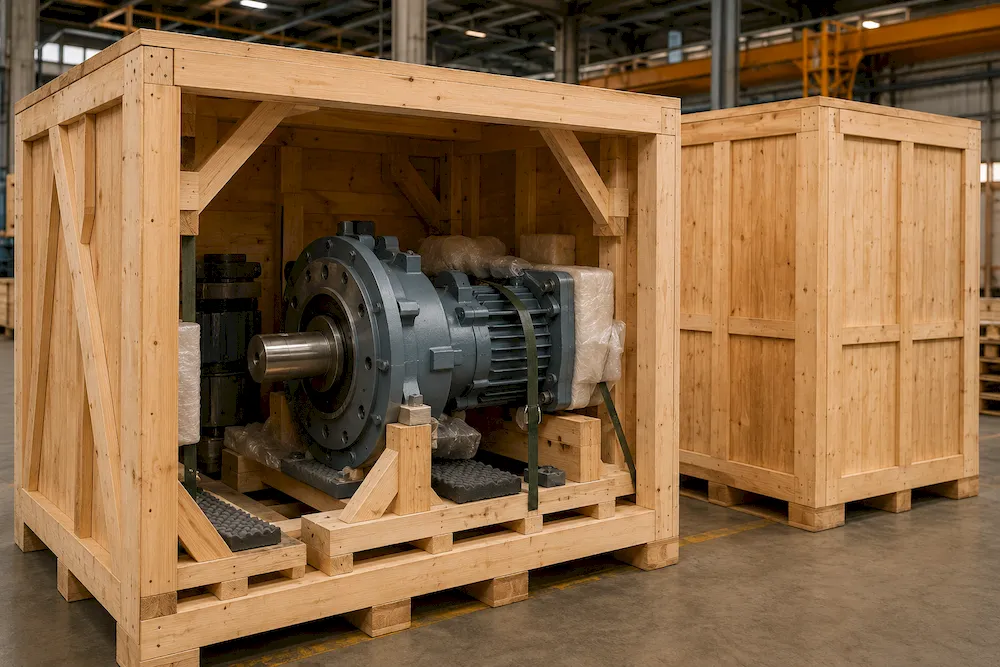
Wooden crates are box-like packaging structures made from wood, plywood, or other wood-based materials. They provide protection on the bottom, sides, and sometimes the top of the cargo.
Compared with wooden pallets, wooden crates offer more complete protection. They are often used for products that are heavy, fragile, valuable, irregular in shape, or easy to damage during long-distance transportation.
Common Uses of Wooden Crates
Wooden crates are often used for:
- Industrial machinery
- Electrical equipment
- Auto parts
- Glass products
- Metal products
- Molds
- Precision instruments
- Large equipment
- Export shipments
- High-value cargo
Wooden crates can be customized based on the product’s size, weight, shape, and shipping method.
Main Difference Between Wooden Pallets and Wooden Crates
The biggest difference is the level of protection.
A wooden pallet supports the cargo from the bottom. A wooden crate protects the cargo from multiple sides.
Wooden Pallet
A wooden pallet is mainly designed for:
- Supporting goods
- Making forklift handling easier
- Improving warehouse storage efficiency
- Helping with container loading
- Reducing direct contact between cargo and the floor
Wooden Crate
A wooden crate is mainly designed for:
- Protecting goods from impact
- Reducing damage during transport
- Covering the cargo from outside contact
- Supporting heavy or irregular products
- Providing safer export packaging
In simple words, pallets are better for handling. Crates are better for protection.
Advantages of Wooden Pallets
Wooden pallets are popular because they are simple, strong, and cost-effective.
Lower Packaging Cost
In most cases, wooden pallets cost less than wooden crates. They use less material and have a simpler structure. For products that do not need full protection, pallets can be a practical and economical choice.
This is especially useful for large-volume shipments where each unit does not need an individual crate.
Easy Handling
Wooden pallets are designed for forklifts and pallet jacks. This makes loading, unloading, and warehouse movement much easier.
For factories, warehouses, and logistics companies, pallets can save time and labor costs.
Good for Standard Cargo
If the product is packed in cartons, bags, or strong outer boxes, a wooden pallet can provide enough bottom support.
For example, a shipment of carton-packed goods can be placed on pallets, wrapped with stretch film, and moved directly by forklift.
Efficient for Container Loading
Wooden pallets can make container loading more organized. They help arrange goods in stable units and make unloading easier at the destination.
When pallet size is designed properly, it can also help improve container space utilization.
Disadvantages of Wooden Pallets
Although pallets are useful, they do not protect every type of cargo.
Limited Side Protection
A pallet only supports the bottom of the goods. It does not protect the sides or top. If cargo is hit during transport, the product may still be damaged.
This is a problem for fragile, high-value, or irregular products.
Not Suitable for Some Heavy Equipment
Some heavy machines or large equipment need special support points. A basic pallet may not be strong enough.
If the weight is too high, the pallet may break or become unstable during forklift handling.
Extra Protection May Be Needed
Products on pallets may need extra materials such as:
- Stretch film
- Straps
- Corner protectors
- Foam
- Cartons
- Moisture-proof covers
If many extra materials are required, the total packaging cost may increase.
Advantages of Wooden Crates
Wooden crates provide a higher level of protection and are more suitable for demanding shipments.
Better Product Protection
A wooden crate can protect the cargo from impact, pressure, dust, and outside contact. This is very important during long-distance transport, especially when goods pass through many loading and unloading points.
For export shipments, crates can reduce the risk of damage during sea freight, air freight, and land transport.
Suitable for Heavy-Duty Cargo
Wooden crates can be designed with a reinforced base, thicker panels, stronger beams, and metal parts. This makes them suitable for heavy machines, molds, large components, and industrial equipment.
A good heavy-duty crate can support the weight of the cargo and make forklift handling safer.
Customizable Design
Wooden crates can be customized in many ways, including:
- Size
- Load-bearing capacity
- Board thickness
- Base structure
- Forklift entry direction
- Inner support
- Moisture-proof layer
- Shock protection
- Steel belt reinforcement
- Stackable structure
This makes wooden crates suitable for products that cannot use standard packaging.
Better for Export Shipments
Wooden crates are often used for export goods because they provide stronger protection during long transport. They can also be made to meet international quarantine requirements, such as IPPC standards.
For cargo shipped by sea, wooden crates can also be combined with vacuum packaging or moisture-proof materials to reduce rust and moisture damage.
Disadvantages of Wooden Crates
Wooden crates are strong, but they are not always the best choice for every shipment.
Higher Cost
Wooden crates usually cost more than pallets because they use more materials and require more production work.
For low-value or simple products, using a full wooden crate may not be necessary.
More Weight
Wooden crates are heavier than pallets. This may increase shipping weight, especially for air freight.
If the cargo is not fragile or high value, the extra weight may not be worth it.
More Space Required
Some wooden crates take up more space than palletized goods. If the crate design is not optimized, it may reduce container loading efficiency.
This is why custom crate design should consider container size and loading method.
When Should You Choose Wooden Pallets?
Wooden pallets are usually the better choice when the cargo already has outer packaging and mainly needs support and easy handling.
Wooden Pallets Are Suitable When:
- The goods are packed in cartons or bags
- The cargo is not fragile
- The product has regular shape
- The main purpose is forklift handling
- The shipment needs lower packaging cost
- The goods are stored or moved in warehouses
- The cargo does not need full side protection
- Large quantities need to be shipped efficiently
For example, if you are exporting carton-packed components, wooden pallets with stretch film and straps may be enough.
When Should You Choose Wooden Crates?
Wooden crates are better when cargo needs stronger protection or customized support.
Wooden Crates Are Suitable When:
- The product is heavy
- The product is fragile
- The cargo is high value
- The shape is irregular
- The goods need long-distance shipping
- The shipment includes machinery or equipment
- The cargo needs protection from impact
- The shipment needs moisture-proof or anti-rust packaging
- The goods need to meet export packaging requirements
For example, industrial machines, molds, motors, glass products, and precision equipment often need wooden crates instead of simple pallets.
Wooden Pallets vs. Wooden Crates for Export Shipping
For export shipments, the right choice depends on product risk, transport distance, and customs requirements.
Sea Freight
Sea freight usually takes longer and may expose cargo to moisture, vibration, and multiple handling steps.
For sea freight:
- Pallets are suitable for carton goods and stable cargo
- Crates are better for machinery, equipment, and fragile goods
- Vacuum crates may be needed for moisture-sensitive products
- IPPC-approved wood packaging is important for customs clearance
Air Freight
Air freight is faster but more expensive. Weight and volume are important.
For air freight:
- Pallets may reduce packaging weight
- Lightweight wooden crates may be used for valuable cargo
- Steel belt crates may be useful for strength and efficiency
- Packaging should avoid unnecessary weight
Land Transport
Land transport may include trucks, rail, and warehouse transfers.
For land transport:
- Pallets are good for easy movement
- Crates are better when cargo may face impact
- Strong base design is important
- Goods should be fixed properly inside the packaging
Cost Comparison
Cost is often a key factor in packaging decisions.
Wooden Pallets Usually Cost Less
Pallets use less wood and are faster to produce. They are suitable for simple cargo and large-volume shipments.
Wooden Crates Usually Cost More
Crates need more materials, more labor, and more design work. However, they can reduce the risk of cargo damage.
In many cases, the cheapest packaging is not the best choice. If a product is damaged during shipping, the loss may be much higher than the packaging cost.
A good decision should consider:
- Product value
- Damage risk
- Shipping distance
- Handling method
- Customs requirements
- Customer expectations
- Total logistics cost
How to Make the Right Choice
Before choosing between wooden pallets and wooden crates, ask these questions:
Key Questions to Consider
- How heavy is the cargo?
- Is the product fragile?
- Does the product already have strong outer packaging?
- Will the cargo be shipped by sea, air, or land?
- How many times will it be loaded and unloaded?
- Does the product need moisture protection?
- Does the destination country require IPPC-compliant wood packaging?
- Is the cargo regular or irregular in shape?
- Is the product high value?
- Does the packaging need to be stackable?
If most answers point to easy handling and lower cost, wooden pallets may be enough. If most answers point to safety, protection, and export risk control, wooden crates are usually better.
Can Pallets and Crates Be Used Together?
Yes. In many export projects, pallets and crates are used together.
For example, a wooden crate may have a pallet-style base. This gives the cargo full protection and also allows easy forklift handling.
This combined structure is common for:
- Machinery
- Equipment
- Export crates
- Heavy-duty boxes
- Fragile cargo
- Custom industrial packaging
Using a crate with a pallet base can provide both protection and handling efficiency.
Final Thoughts
Wooden pallets and wooden crates are both important packaging solutions. The better choice depends on your cargo and shipping needs.
Wooden pallets are a good choice for standard goods, carton-packed products, and shipments that mainly need easy handling and lower cost. They are simple, practical, and efficient.
Wooden crates are better for heavy, fragile, high-value, or irregular cargo. They provide stronger protection and can be customized for export shipments, machinery, equipment, and long-distance transport.
For many export businesses, the best solution is not simply choosing pallets or crates. It is choosing the packaging structure that matches the product, shipping method, and risk level.
A professional wooden packaging supplier can help design the right solution, meet international export standards, reduce damage risk, and improve logistics efficiency.