
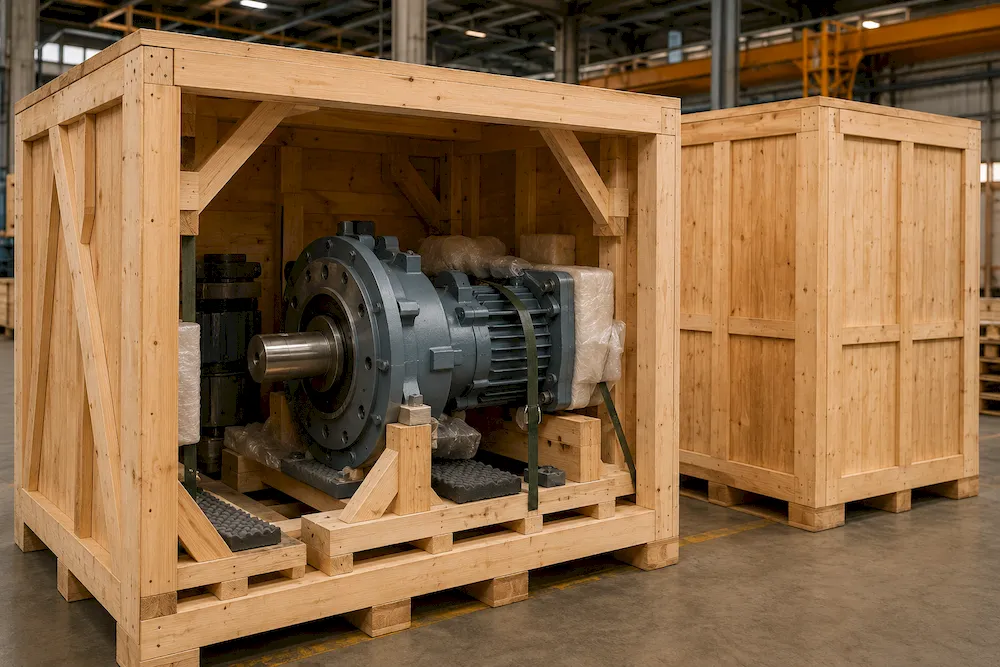
How Custom Wooden Crates Protect Heavy-Duty Industrial Equipment

Heavy-duty industrial equipment is often large, expensive, and difficult to move. It may include machinery, molds, motors, pumps, metal parts, electrical cabinets, production line components, and precision equipment. These products are not easy to replace if they are damaged during transportation.

For this reason, strong packaging is very important. A simple pallet or carton is usually not enough for heavy-duty equipment. Custom wooden crates are often the better solution because they can be designed according to the size, weight, shape, and shipping method of the equipment.

A good wooden crate does more than cover the product. It supports the weight, protects the surface, reduces movement, and helps the cargo arrive safely at its destination.


Why Heavy-Duty Equipment Needs Special Packaging

Heavy-duty industrial equipment faces many risks during transport. It may be moved by forklift, crane, truck, container, ship, or rail. During this process, the cargo may be lifted, pushed, stacked, shaken, or exposed to moisture.

Common Risks During Shipping

Industrial equipment can be damaged by:

  • Strong impact during loading and unloading
  • Vibration during truck or sea transport
  • Moisture inside containers
  • Poor weight distribution
  • Wrong forklift handling
  • Loose parts inside the package
  • Surface scratches
  • Rust or corrosion
  • Pressure from stacking
  • Movement inside the crate

For small or low-value products, minor damage may be acceptable. But for industrial equipment, even a small problem can cause serious loss. It may delay installation, affect production, or lead to repair costs.


What Is a Custom Wooden Crate?

A custom wooden crate is a wooden packaging box designed for a specific product. Unlike standard crates, it is made based on the exact requirements of the cargo.

The supplier needs to consider the equipment’s:

  • Length
  • Width
  • Height
  • Weight
  • Center of gravity
  • Support points
  • Fragile parts
  • Lifting method
  • Shipping route
  • Destination country
  • Moisture protection needs

Why Customization Matters

Heavy equipment is often not a standard shape. Some machines have uneven bases, control panels, pipes, motors, or exposed parts. If the packaging is not customized, the equipment may not be supported correctly.

A custom crate can be designed to fit the cargo closely and safely. This reduces movement and gives the equipment better protection during transport.


Strong Base Support Protects the Equipment

For heavy-duty equipment, the base of the wooden crate is one of the most important parts. The base carries the full weight of the product.

If the base is too weak, the crate may break during lifting or transport. This can cause serious damage and safety risks.

Base Structure Design

A good heavy-duty crate base may include:

  • Thick wooden beams
  • Reinforced bottom boards
  • Strong support blocks
  • Forklift entry positions
  • Load-bearing skids
  • Steel reinforcement if needed
  • Fixing points for bolts or straps

The base should be designed according to the real weight of the equipment, not just the outer size.

Forklift Handling

Most heavy equipment is moved by forklift during warehouse handling and container loading. The crate should have enough space for forklift forks and a strong bottom structure.

A good forklift base design helps reduce damage during movement and makes handling safer for workers.


Custom Crates Reduce Movement During Transport

One major reason for cargo damage is movement inside the package. If a machine moves inside the crate, it may hit the sides, damage its surface, or break important parts.

Custom wooden crates can include internal fixing systems to keep the equipment stable.

Inner Fixing Methods

Common fixing methods include:

  • Wooden blocks
  • Bolts
  • Metal brackets
  • Straps
  • Foam padding
  • Rubber pads
  • Shock-absorbing materials
  • Corner protectors

The purpose is to hold the equipment in place and prevent it from shifting during transport.

Why Internal Support Is Important

Heavy products may look stable because of their weight, but they can still move when the truck brakes suddenly or when the container shakes during sea transport.

Even a small movement can cause scratches, dents, or structural damage. Internal support keeps the cargo fixed and reduces these risks.


Protection Against Impact and Pressure

During transportation, equipment may face impact from different directions. The crate may be touched by forklifts, stacked near other cargo, or moved through busy logistics areas.

A custom wooden crate provides a protective outer shell around the equipment.

Side and Top Protection

Wooden crates can protect equipment from:

  • Side impact
  • Top pressure
  • Dust
  • Scratches
  • Direct contact with other cargo
  • Accidental hits during handling

For expensive machinery, full enclosure is often better than open packaging. A closed wooden crate gives the product more complete protection.

Reinforced Corners and Panels

Heavy-duty crates often use stronger panels, thick frames, and reinforced corners. These parts help the crate resist pressure and impact.

For large cargo, diagonal braces may also be added to improve the strength of the crate structure.


Moisture Protection for Sea Freight

Many heavy-duty machines and metal components are shipped by sea. Sea freight may take several weeks. During this time, moisture can become a serious problem.

Containers may have temperature changes, condensation, and humid air. This can lead to rust, corrosion, or damage to electrical parts.

Common Moisture Protection Methods

Custom wooden crates can be combined with:

  • Vacuum packaging
  • Aluminum foil bags
  • Moisture-proof film
  • Desiccants
  • Anti-rust oil
  • VCI materials
  • Waterproof covers
  • Sealed inner packaging

These materials help protect metal parts and precision equipment during long-distance shipping.

When Vacuum Packaging Is Needed

Vacuum packaging is often used for:

  • Precision machines
  • Metal parts
  • Electrical equipment
  • Motors
  • Molds
  • Products shipped by sea
  • Cargo stored for a long time before use

A wooden crate protects the outside, while vacuum or moisture-proof packaging protects the inside.


Better Protection for Irregular-Shaped Equipment

Industrial equipment often has irregular shapes. Some machines have control boxes, pipes, wheels, valves, handles, or exposed parts. These areas may be easy to damage.

A standard crate may leave too much empty space or fail to protect key parts.

Custom Design for Special Shapes

A custom wooden crate can include special inner supports for:

  • Protruding parts
  • Fragile panels
  • Motors
  • Control systems
  • Pipes and valves
  • Precision components
  • Uneven bases
  • Lifting points

This makes the crate more suitable for the actual product.

Reducing Empty Space

Too much empty space inside the crate can increase movement. A custom crate can reduce unnecessary space while still leaving room for protective materials.

This helps improve both safety and shipping efficiency.


Safe Loading and Container Transport

Custom wooden crates can also improve loading efficiency. When the crate size is planned correctly, it can help make better use of container space.

Container Loading Considerations

Before making the crate, it is useful to consider:

  • Container size
  • Loading direction
  • Number of crates per container
  • Forklift access
  • Stacking ability
  • Weight distribution
  • Cargo center of gravity

Good crate design can reduce wasted space and help avoid loading problems.

Stackable Design

Some wooden crates can be designed to be stackable. This is useful when shipping multiple units.

However, stackable crates must be strong enough to handle the pressure from the cargo above. The crate structure should be designed carefully to avoid collapse or product damage.


Compliance with Export Requirements

For international shipments, wood packaging often needs to meet quarantine requirements. Many countries require wood packaging materials to comply with ISPM 15 standards.

IPPC-Approved Wood Packaging

IPPC-approved wood packaging means the wood has been treated according to international standards. This helps reduce the risk of pest-related problems and customs delays.

For exporters, compliant packaging can help goods clear customs more smoothly.

Fumigation-Free Export Packaging

Some wood packaging is treated and marked properly, so it can be used directly for export without extra fumigation. This can save time and reduce logistics steps.

For heavy-duty industrial equipment, delays at customs can be costly. Using compliant wooden crates helps reduce this risk.


How Custom Wooden Crates Help Reduce Total Cost

Custom crates may cost more than simple packaging at the beginning. However, they can help reduce total cost in the whole logistics process.

Lower Risk of Product Damage

If heavy machinery is damaged during shipping, the cost can be much higher than the crate itself. There may be repair costs, replacement costs, delayed installation, and customer complaints.

A strong custom crate can reduce these risks.

Better Logistics Efficiency

Custom crates can also improve:

  • Loading speed
  • Forklift handling
  • Container space use
  • Warehouse storage
  • Cargo identification
  • Customs clearance
  • Delivery reliability

This can help companies save time and reduce hidden costs.


What Information Should You Provide to the Crate Supplier?

To design the right wooden crate, the supplier needs enough product information.

Important Details to Share

Before production, you should provide:

  • Product dimensions
  • Product weight
  • Photos or drawings
  • Center of gravity
  • Fragile parts
  • Shipping method
  • Destination country
  • Required export standards
  • Moisture protection needs
  • Loading and unloading method
  • Whether stacking is needed
  • Quantity and delivery schedule

The more details the supplier has, the better the packaging design will be.


Choosing the Right Wooden Crate Supplier

Not every wood packaging supplier can make heavy-duty export crates. Industrial equipment packaging requires experience, strong materials, and good design ability.

A Good Supplier Should Offer

  • Custom crate design
  • Strong production capability
  • IPPC-approved treatment
  • Export packaging experience
  • Quality inspection
  • Different crate structures
  • Moisture-proof packaging options
  • Fast communication
  • Ability to handle heavy cargo requirements

A professional supplier can help choose the right crate structure based on the equipment and shipping conditions.


Common Mistakes to Avoid

When packaging heavy-duty equipment, companies should avoid common mistakes.

Mistakes That Increase Risk

  • Using a standard crate for irregular equipment
  • Choosing weak bottom support
  • Ignoring the equipment’s center of gravity
  • Not fixing the cargo inside the crate
  • Forgetting moisture protection for sea freight
  • Using wood packaging without export compliance
  • Making the crate too large or too small
  • Not planning forklift entry points
  • Ignoring stacking pressure
  • Choosing packaging only by price

These mistakes may lead to cargo damage, shipping delays, or extra costs.


Final Thoughts

Custom wooden crates are one of the most effective packaging solutions for heavy-duty industrial equipment. They provide strong base support, protect the sides and top, reduce movement, and help prevent impact damage during transport.

For sea freight, custom crates can also be combined with moisture-proof or vacuum packaging to protect metal parts and precision equipment. For export shipments, IPPC-approved and fumigation-free wooden crates can help meet international quarantine standards and support smoother customs clearance.

The right packaging should match the product’s weight, size, shape, shipping route, and handling method. A professional wooden packaging supplier can design a crate that protects the equipment, improves logistics efficiency, and reduces the risk of costly damage.

For heavy-duty industrial equipment, packaging is not just a container. It is a safety system for the whole shipment.
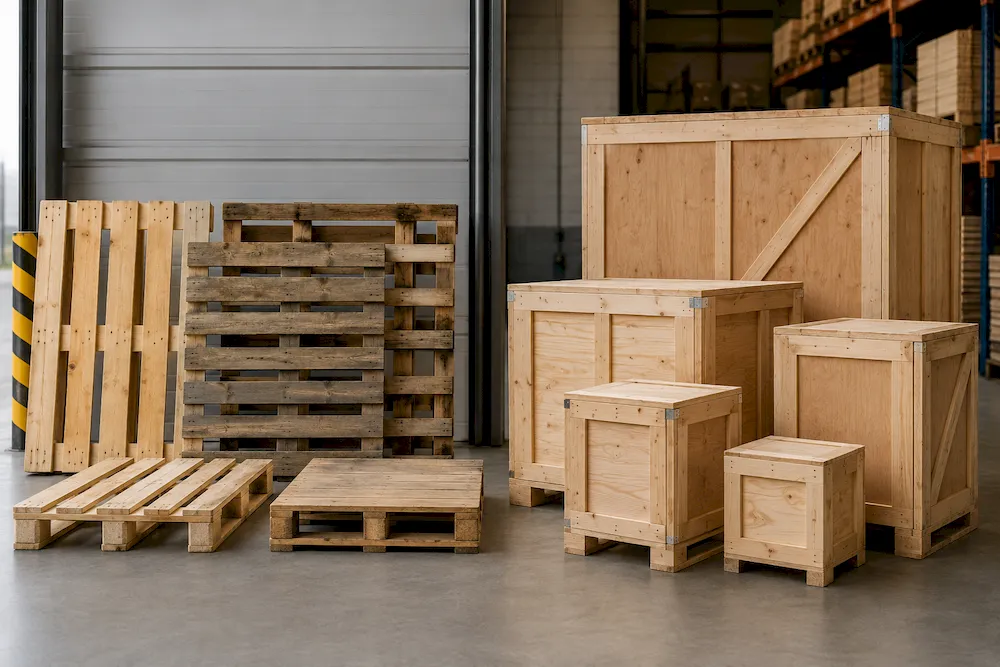
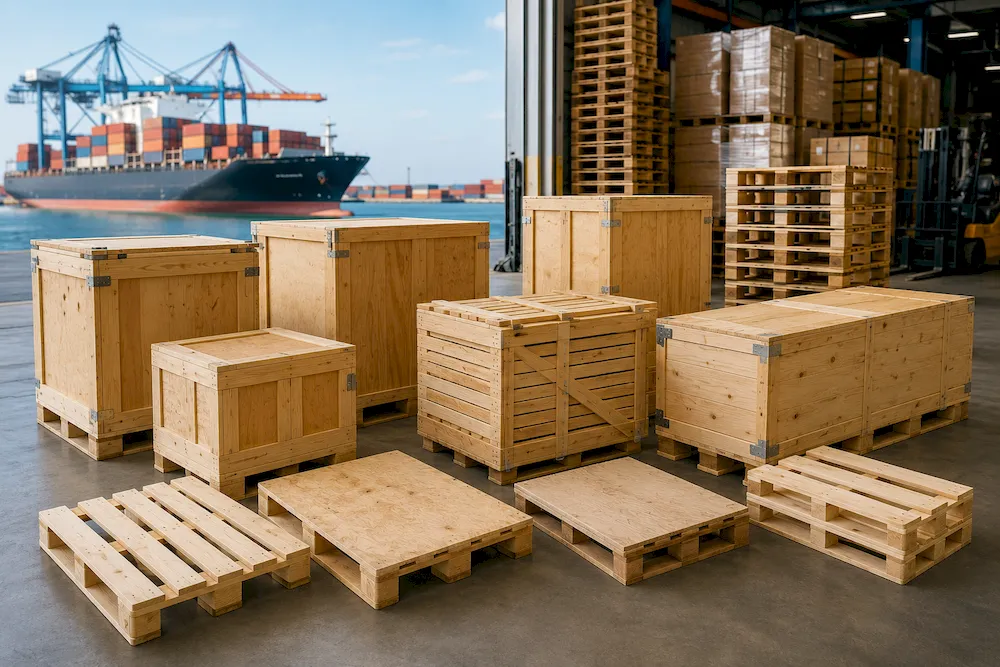
Wooden Pallets vs. Wooden Crates: Which Packaging Solution Is Better?

When companies prepare products for storage, handling, or export shipping, one common question is: should we use wooden pallets or wooden crates?

Both wooden pallets and wooden crates are widely used in industrial packaging. They are strong, practical, and suitable for many types of cargo. However, they are not the same. A wooden pallet is mainly used for support and easy handling. A wooden crate is mainly used for stronger protection.

Choosing the right packaging solution can help reduce product damage, improve loading efficiency, and lower logistics costs. This article explains the differences between wooden pallets and wooden crates, their main advantages, and how to choose the better option for your shipment.


What Are Wooden Pallets?

Wooden pallets are flat wooden platforms used to support goods during storage and transportation. Products are usually placed on top of the pallet and fixed with straps, stretch film, cartons, or other packaging materials.

Wooden pallets are one of the most common packaging tools in warehouses, factories, and logistics centers. They make it easier for forklifts, pallet jacks, and other equipment to move goods quickly.

Common Uses of Wooden Pallets

Wooden pallets are often used for:

  • Carton goods
  • Bagged products
  • Boxes
  • Drums
  • Metal parts
  • Machinery components
  • Building materials
  • Food and beverage products
  • Export cargo loaded into containers

If the product already has good outer packaging, a pallet may be enough for safe handling and transport.


What Are Wooden Crates?

Wooden crates are box-like packaging structures made from wood, plywood, or other wood-based materials. They provide protection on the bottom, sides, and sometimes the top of the cargo.

Compared with wooden pallets, wooden crates offer more complete protection. They are often used for products that are heavy, fragile, valuable, irregular in shape, or easy to damage during long-distance transportation.

Common Uses of Wooden Crates

Wooden crates are often used for:

  • Industrial machinery
  • Electrical equipment
  • Auto parts
  • Glass products
  • Metal products
  • Molds
  • Precision instruments
  • Large equipment
  • Export shipments
  • High-value cargo

Wooden crates can be customized based on the product’s size, weight, shape, and shipping method.


Main Difference Between Wooden Pallets and Wooden Crates

The biggest difference is the level of protection.

A wooden pallet supports the cargo from the bottom. A wooden crate protects the cargo from multiple sides.

Wooden Pallet

A wooden pallet is mainly designed for:

  • Supporting goods
  • Making forklift handling easier
  • Improving warehouse storage efficiency
  • Helping with container loading
  • Reducing direct contact between cargo and the floor

Wooden Crate

A wooden crate is mainly designed for:

  • Protecting goods from impact
  • Reducing damage during transport
  • Covering the cargo from outside contact
  • Supporting heavy or irregular products
  • Providing safer export packaging

In simple words, pallets are better for handling. Crates are better for protection.


Advantages of Wooden Pallets

Wooden pallets are popular because they are simple, strong, and cost-effective.

Lower Packaging Cost

In most cases, wooden pallets cost less than wooden crates. They use less material and have a simpler structure. For products that do not need full protection, pallets can be a practical and economical choice.

This is especially useful for large-volume shipments where each unit does not need an individual crate.

Easy Handling

Wooden pallets are designed for forklifts and pallet jacks. This makes loading, unloading, and warehouse movement much easier.

For factories, warehouses, and logistics companies, pallets can save time and labor costs.

Good for Standard Cargo

If the product is packed in cartons, bags, or strong outer boxes, a wooden pallet can provide enough bottom support.

For example, a shipment of carton-packed goods can be placed on pallets, wrapped with stretch film, and moved directly by forklift.

Efficient for Container Loading

Wooden pallets can make container loading more organized. They help arrange goods in stable units and make unloading easier at the destination.

When pallet size is designed properly, it can also help improve container space utilization.


Disadvantages of Wooden Pallets

Although pallets are useful, they do not protect every type of cargo.

Limited Side Protection

A pallet only supports the bottom of the goods. It does not protect the sides or top. If cargo is hit during transport, the product may still be damaged.

This is a problem for fragile, high-value, or irregular products.

Not Suitable for Some Heavy Equipment

Some heavy machines or large equipment need special support points. A basic pallet may not be strong enough.

If the weight is too high, the pallet may break or become unstable during forklift handling.

Extra Protection May Be Needed

Products on pallets may need extra materials such as:

  • Stretch film
  • Straps
  • Corner protectors
  • Foam
  • Cartons
  • Moisture-proof covers

If many extra materials are required, the total packaging cost may increase.


Advantages of Wooden Crates

Wooden crates provide a higher level of protection and are more suitable for demanding shipments.

Better Product Protection

A wooden crate can protect the cargo from impact, pressure, dust, and outside contact. This is very important during long-distance transport, especially when goods pass through many loading and unloading points.

For export shipments, crates can reduce the risk of damage during sea freight, air freight, and land transport.

Suitable for Heavy-Duty Cargo

Wooden crates can be designed with a reinforced base, thicker panels, stronger beams, and metal parts. This makes them suitable for heavy machines, molds, large components, and industrial equipment.

A good heavy-duty crate can support the weight of the cargo and make forklift handling safer.

Customizable Design

Wooden crates can be customized in many ways, including:

  • Size
  • Load-bearing capacity
  • Board thickness
  • Base structure
  • Forklift entry direction
  • Inner support
  • Moisture-proof layer
  • Shock protection
  • Steel belt reinforcement
  • Stackable structure

This makes wooden crates suitable for products that cannot use standard packaging.

Better for Export Shipments

Wooden crates are often used for export goods because they provide stronger protection during long transport. They can also be made to meet international quarantine requirements, such as IPPC standards.

For cargo shipped by sea, wooden crates can also be combined with vacuum packaging or moisture-proof materials to reduce rust and moisture damage.


Disadvantages of Wooden Crates

Wooden crates are strong, but they are not always the best choice for every shipment.

Higher Cost

Wooden crates usually cost more than pallets because they use more materials and require more production work.

For low-value or simple products, using a full wooden crate may not be necessary.

More Weight

Wooden crates are heavier than pallets. This may increase shipping weight, especially for air freight.

If the cargo is not fragile or high value, the extra weight may not be worth it.

More Space Required

Some wooden crates take up more space than palletized goods. If the crate design is not optimized, it may reduce container loading efficiency.

This is why custom crate design should consider container size and loading method.


When Should You Choose Wooden Pallets?

Wooden pallets are usually the better choice when the cargo already has outer packaging and mainly needs support and easy handling.

Wooden Pallets Are Suitable When:

  • The goods are packed in cartons or bags
  • The cargo is not fragile
  • The product has regular shape
  • The main purpose is forklift handling
  • The shipment needs lower packaging cost
  • The goods are stored or moved in warehouses
  • The cargo does not need full side protection
  • Large quantities need to be shipped efficiently

For example, if you are exporting carton-packed components, wooden pallets with stretch film and straps may be enough.


When Should You Choose Wooden Crates?

Wooden crates are better when cargo needs stronger protection or customized support.

Wooden Crates Are Suitable When:

  • The product is heavy
  • The product is fragile
  • The cargo is high value
  • The shape is irregular
  • The goods need long-distance shipping
  • The shipment includes machinery or equipment
  • The cargo needs protection from impact
  • The shipment needs moisture-proof or anti-rust packaging
  • The goods need to meet export packaging requirements

For example, industrial machines, molds, motors, glass products, and precision equipment often need wooden crates instead of simple pallets.


Wooden Pallets vs. Wooden Crates for Export Shipping

For export shipments, the right choice depends on product risk, transport distance, and customs requirements.

Sea Freight

Sea freight usually takes longer and may expose cargo to moisture, vibration, and multiple handling steps.

For sea freight:

  • Pallets are suitable for carton goods and stable cargo
  • Crates are better for machinery, equipment, and fragile goods
  • Vacuum crates may be needed for moisture-sensitive products
  • IPPC-approved wood packaging is important for customs clearance

Air Freight

Air freight is faster but more expensive. Weight and volume are important.

For air freight:

  • Pallets may reduce packaging weight
  • Lightweight wooden crates may be used for valuable cargo
  • Steel belt crates may be useful for strength and efficiency
  • Packaging should avoid unnecessary weight

Land Transport

Land transport may include trucks, rail, and warehouse transfers.

For land transport:

  • Pallets are good for easy movement
  • Crates are better when cargo may face impact
  • Strong base design is important
  • Goods should be fixed properly inside the packaging

Cost Comparison

Cost is often a key factor in packaging decisions.

Wooden Pallets Usually Cost Less

Pallets use less wood and are faster to produce. They are suitable for simple cargo and large-volume shipments.

Wooden Crates Usually Cost More

Crates need more materials, more labor, and more design work. However, they can reduce the risk of cargo damage.

In many cases, the cheapest packaging is not the best choice. If a product is damaged during shipping, the loss may be much higher than the packaging cost.

A good decision should consider:

  • Product value
  • Damage risk
  • Shipping distance
  • Handling method
  • Customs requirements
  • Customer expectations
  • Total logistics cost

How to Make the Right Choice

Before choosing between wooden pallets and wooden crates, ask these questions:

Key Questions to Consider

  • How heavy is the cargo?
  • Is the product fragile?
  • Does the product already have strong outer packaging?
  • Will the cargo be shipped by sea, air, or land?
  • How many times will it be loaded and unloaded?
  • Does the product need moisture protection?
  • Does the destination country require IPPC-compliant wood packaging?
  • Is the cargo regular or irregular in shape?
  • Is the product high value?
  • Does the packaging need to be stackable?

If most answers point to easy handling and lower cost, wooden pallets may be enough. If most answers point to safety, protection, and export risk control, wooden crates are usually better.


Can Pallets and Crates Be Used Together?

Yes. In many export projects, pallets and crates are used together.

For example, a wooden crate may have a pallet-style base. This gives the cargo full protection and also allows easy forklift handling.

This combined structure is common for:

  • Machinery
  • Equipment
  • Export crates
  • Heavy-duty boxes
  • Fragile cargo
  • Custom industrial packaging

Using a crate with a pallet base can provide both protection and handling efficiency.


Final Thoughts

Wooden pallets and wooden crates are both important packaging solutions. The better choice depends on your cargo and shipping needs.

Wooden pallets are a good choice for standard goods, carton-packed products, and shipments that mainly need easy handling and lower cost. They are simple, practical, and efficient.

Wooden crates are better for heavy, fragile, high-value, or irregular cargo. They provide stronger protection and can be customized for export shipments, machinery, equipment, and long-distance transport.

For many export businesses, the best solution is not simply choosing pallets or crates. It is choosing the packaging structure that matches the product, shipping method, and risk level.

A professional wooden packaging supplier can help design the right solution, meet international export standards, reduce damage risk, and improve logistics efficiency.

How to Choose the Right Wooden Packaging for Export Shipments

Choosing the right wooden packaging is important for any export shipment. When goods move across countries, they may face long-distance transport, loading and unloading, warehouse storage, customs inspection, and changing weather conditions. Good packaging can protect the cargo, reduce damage, and help the shipment pass customs more smoothly.

For many industries, wooden packaging is still one of the most practical choices. It is strong, easy to customize, and suitable for many types of cargo. Wooden pallets, wooden crates, steel belt crates, sleeve pack crates, and heavy-duty wooden boxes are widely used for export packaging.

This guide explains how to choose the right wooden packaging for export shipments in a simple way.


Why Wooden Packaging Is Commonly Used for Export

Wooden packaging is used in many international shipments because it provides strong support and good protection. It can be made into different sizes and structures based on the product shape, weight, and transport method.

Compared with simple cartons or plastic packaging, wooden packaging is often better for heavy goods, machinery, metal parts, industrial equipment, glass products, and fragile cargo.

Main Benefits of Wooden Packaging

Wooden packaging has several advantages:

  • Strong load-bearing ability
  • Suitable for large and heavy cargo
  • Easy to customize
  • Good protection during sea, air, and land transport
  • Can be used with pallets for forklift handling
  • Suitable for export packing and long-distance shipping
  • Can meet international quarantine requirements when properly treated

For export business, choosing the right packaging is not only about protecting products. It also affects customs clearance, delivery time, and customer satisfaction.


Understand Your Cargo First

Before choosing wooden packaging, you need to understand your cargo clearly. Different goods need different packaging structures.

Check the Cargo Weight

Weight is one of the most important factors. Light products may only need a wooden pallet or a simple wooden crate. Heavy-duty machinery or industrial equipment may need a reinforced wooden crate with stronger base support.

For heavy cargo, the packaging must be strong enough to handle:

  • Product weight
  • Stacking pressure
  • Forklift movement
  • Vibration during transport
  • Loading and unloading impact

If the crate is not strong enough, it may break during shipping and cause product damage.

Check the Cargo Size

The packaging size should match the cargo size. If the packaging is too small, the product may not fit safely. If it is too large, the product may move inside the box during transport.

A suitable wooden crate should leave enough space for inner protection materials, such as foam, EPE, straps, moisture-proof bags, or corner protectors.

Check the Cargo Shape

Some products have regular shapes, such as boxes, panels, or standard parts. These are easier to pack. Some products have irregular shapes, such as machines, motors, molds, and equipment parts. These may need custom wooden packaging.

For irregular cargo, the packaging supplier should design the crate based on the product shape and support points.


Choose the Right Type of Wooden Packaging

There are several common types of wooden packaging for export shipments. Each type has its own use.

Wooden Pallets

Wooden pallets are mainly used for goods that need easy forklift handling. They are suitable for cartons, bags, drums, boxes, and many standard products.

Wooden pallets can improve loading efficiency and make warehouse handling easier.

They are suitable for:

  • Carton goods
  • Bagged products
  • Machinery parts
  • Metal parts
  • Bulk cargo with outer packaging
  • Goods loaded into containers

If your goods already have strong outer packaging, wooden pallets may be enough.

Wooden Crates

Wooden crates provide better protection than pallets. They are suitable for cargo that needs side protection, stronger structure, or safer transport.

Wooden crates are often used for:

  • Machinery
  • Equipment
  • Auto parts
  • Electrical products
  • Glass products
  • Fragile goods
  • Export cargo with higher protection needs

A wooden crate can be open-style or closed-style. Closed wooden crates offer better protection from dust, impact, and outside contact.

Heavy-Duty Wooden Crates

Heavy-duty crates are designed for large and heavy products. They usually have a stronger base, thicker panels, and reinforced corners.

They are suitable for:

  • Industrial machines
  • Large equipment
  • Molds
  • Heavy metal parts
  • Engineering components
  • High-value cargo

For heavy-duty packaging, the bottom structure is very important. The base must support the full weight of the cargo and allow safe forklift operation.

Steel Belt Crates

Steel belt crates are made with wood panels and steel belt reinforcement. They are strong, clean, and often easy to assemble.

They are suitable for export shipments that need strong packaging but also require better space efficiency.

Steel belt crates are often used for:

  • Machinery parts
  • Electronics
  • Auto components
  • Hardware
  • Industrial products
  • Export cargo

They can also help reduce storage space before use because some designs can be folded or assembled quickly.

Sleeve Pack Crates

Sleeve pack crates are often designed with a base, sleeve body, and top cover. They are practical for products that need repeated packing, easy assembly, or container loading.

They are suitable for:

  • Medium to large cargo
  • Industrial components
  • Export goods
  • Products that need easy loading and unloading

The structure can be customized based on the cargo and shipping method.

Vacuum Wooden Crates

Vacuum crates are often used for products that need moisture protection. They usually include vacuum packaging, moisture-proof materials, and wooden outer packaging.

They are suitable for:

  • Precision equipment
  • Electronic products
  • Metal products
  • Machinery parts
  • Products shipped by sea

Sea transport may expose cargo to moisture and salt air. Vacuum packaging can reduce the risk of rust, corrosion, and moisture damage.


Consider the Shipping Method

The shipping method also affects packaging choice.

Sea Freight

Sea freight usually takes longer. Cargo may stay in containers for weeks. Moisture and movement are common risks.

For sea freight, packaging should focus on:

  • Strong outer protection
  • Moisture protection
  • Good base support
  • Safe container loading
  • Anti-rust and anti-corrosion protection if needed

For machinery and metal products, vacuum packaging or moisture-proof bags may be useful.

Air Freight

Air freight is faster, but cost is usually higher. Packaging should be strong but not too heavy.

For air freight, companies often care about:

  • Packaging weight
  • Space efficiency
  • Easy handling
  • Cargo safety

Steel belt crates or lightweight plywood crates may be suitable for some air shipments.

Land Transport

Land transport includes trucks, rail, and inland logistics. The cargo may face vibration and repeated loading.

For land transport, packaging should have:

  • Stable structure
  • Good fixing inside the crate
  • Strong pallet base
  • Protection against impact

If the cargo needs several transfers, stronger packaging is usually safer.


Make Sure the Packaging Meets Export Standards

Export wooden packaging must meet international quarantine requirements. Many countries require wood packaging materials to follow ISPM 15 standards.

What Is IPPC Marking?

IPPC marking shows that the wood packaging has been treated according to international standards. This helps reduce the risk of pest problems during international trade.

For export shipments, using IPPC-approved wooden packaging can help customs clearance and reduce the risk of delays.

Why Fumigation-Free Packaging Matters

Fumigation-free packaging can be used directly for export when it meets the required standards. This can save time and reduce extra treatment steps before shipment.

For exporters, this is important because delays in customs or quarantine inspection can increase logistics costs and affect delivery schedules.


Check Customization Options

Many export products cannot use standard packaging. Custom wooden packaging is often needed.

Common Customization Details

A good wooden packaging supplier should be able to customize:

  • Length, width, and height
  • Load-bearing capacity
  • Base structure
  • Panel thickness
  • Inner support
  • Forklift entry direction
  • Moisture-proof protection
  • Reinforced corners
  • Marking or labels
  • Stackable design

Customization helps make the packaging safer and more suitable for the actual shipment.

Match Packaging to Industry Needs

Different industries have different packaging needs.

For example:

  • Machinery industry needs strong load support
  • Electronics industry needs moisture and shock protection
  • Auto parts industry needs stable and easy handling packaging
  • Glass or fragile products need inner cushioning
  • Metal products may need anti-rust packaging

The best packaging is not always the thickest or most expensive one. It should match the real transport risk and cargo value.


Pay Attention to Loading and Handling

Good packaging should make loading easier and safer.

Forklift Handling

Most export cargo is moved by forklift. The wooden packaging should have a strong base and enough space for forklift forks.

If the forklift entry design is poor, workers may damage the crate during handling.

Container Loading

For sea freight, packaging size should also consider container loading. A good packaging design can improve space use and reduce shipping cost.

Before production, it is helpful to check:

  • Container size
  • Number of units per container
  • Stacking method
  • Loading direction
  • Total weight distribution

Good design can reduce wasted space and lower logistics cost.


Work With a Professional Wooden Packaging Supplier

Choosing the right supplier is as important as choosing the right packaging type.

A professional supplier should understand export requirements, cargo protection, and custom packaging design.

What to Look for in a Supplier

You can check whether the supplier has:

  • IPPC-approved treatment qualification
  • Export packaging experience
  • Custom design ability
  • Advanced production equipment
  • Stable material supply
  • Quality management system
  • Fast communication
  • Ability to handle urgent orders
  • Experience with different industries

A supplier with export experience can help you avoid many common problems, such as wrong packaging size, weak structure, missing quarantine marks, or poor container loading design.


Common Mistakes to Avoid

When choosing wooden packaging, many companies only focus on price. This can lead to hidden risks.

Avoid These Problems

  • Choosing packaging that is too weak for the cargo
  • Ignoring moisture protection for sea freight
  • Using non-compliant wood packaging for export
  • Leaving too much empty space inside the crate
  • Not fixing the cargo inside the box
  • Using poor forklift base design
  • Not confirming packaging size before production
  • Ignoring customs and quarantine requirements

A small packaging mistake may cause product damage, shipment delay, or extra cost.


Final Thoughts

The right wooden packaging can protect your products, improve shipping safety, and help your export process run more smoothly. Before choosing packaging, you should consider the cargo weight, size, shape, shipping method, export standards, and handling requirements.

Wooden pallets are suitable for simple handling and standard cargo. Wooden crates provide better protection. Heavy-duty crates are better for large equipment. Steel belt crates and sleeve pack crates are useful for efficient export packaging. Vacuum crates are suitable for products that need moisture protection.

For export shipments, it is also important to work with an IPPC-approved wooden packaging supplier. This can help your goods meet international quarantine standards, clear customs more efficiently, and reduce logistics risks.

Good packaging is not just a box around your product. It is part of your export supply chain. A strong and well-designed wooden packaging solution can save time, reduce damage, and protect your business reputation.

Request a Quote